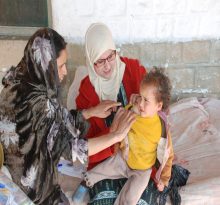
Center

About the Center for Disease Control

The Centers for Disease Control (CDC), National Institute of Health (NIH), Pakistan, is the national technical body responsible for disease surveillance, epidemiology, outbreak detection and response, public health intelligence, emergency preparedness, and implementation support for national and international health obligations. CDC functions as the principal epidemiological arm of NIH and supports evidence-based public health decision-making across the country.

Following the 18th Constitutional Amendment, implementation of health programs became primarily the responsibility of provincial health departments. In this context, CDC provides technical leadership through epidemiological surveillance, evidence generation, development of guidelines and standards, capacity building, outbreak investigations, coordination with provinces and areas, and facilitation of public health emergency response.

CDC is mandated to systematically monitor disease trends and determinants of health, rapidly detect unusual public health events and outbreaks, strengthen prevention and control interventions, support policy development, evaluate public health programs, and facilitate timely dissemination of epidemiological information for action.

Evolution of the Center

  • 1998The Epidemic Investigation Cell (EIC) was established within the Public Health Laboratories Division of NIH.
  • 2013Upgraded by the NIH Board of Governors during its 61st meeting (16 July 2013) as the Field Epidemiology and Disease Surveillance Division (FE&DSD) — the fifth technical division of NIH.
  • 2021Re-designated as the Centers for Disease Control (CDC) under the NIH Re-organization Act, 2021.

Core Functional Components

Surveillance & Response

  • Indicator-based and event-based surveillance
  • Outbreak detection, response and epidemiological analysis
  • Advisories, alerts and Emergency Operations Center activation
  • Monitoring of communicable and non-communicable diseases
  • One Health surveillance activities

IHR, Global Health Security & International Linkages

  • Implementation and coordination of IHR-2005 obligations
  • Strengthening of core capacities
  • International reporting, verification and WHO coordination
  • Public health emergency communication
  • Multisectoral collaboration under the One Health approach

Field Epidemiology & Workforce Development

  • Workforce development and Field Epidemiology Training Programs (FETP)
  • Outbreak investigation training
  • Surveillance system strengthening
  • Operational studies
  • Support to provincial surveillance and response structures

Key Programs & National Initiatives

  • Integrated Disease Surveillance and Response (IDSR) — over 90% coverage in primary and secondary healthcare facilities, with expansion to tertiary institutions underway
  • Surveillance strengthening through DHIS-2 integration and district-level cascade trainings nationwide
  • Field Epidemiology Training Program (FETP), in collaboration with MoNHSR&C
  • Pakistan Mortality Surveillance System (MSS)
  • Infection Prevention and Control — Healthcare Associated Infections (IPC-HCAI) Strengthening Initiative
  • One Health coordination mechanisms
  • Rapid Response Team (RRT) development
  • Public Health Emergency Operations Center (EOC) functions
  • Public information, risk communication and Seasonal Awareness & Alert Letter (SAAL)
  • Development of advisories and guidelines, and coordination with provincial units and international partners

Statutory Functions under the NIH Re-organization Act, 2021

  1. The Center for Disease Control shall set the strategic agenda and mandate related to infectious disease surveillance as well as promotive, preventive and therapeutic aspects for infectious diseases of public health importance in Pakistan
  2. The Center shall perform such functions as are directed and assigned by the Federal Government or the Board including,-
    1. Advisory on epidemics, disease outbreaks, prevention, control, surveillance and response to an outbreak;
    2. Preparation and application of the principles and techniques of emergency and preparedness at the national and sub-national levels;
    3. Develop an Emerging Infections Unit, the functions of which shall include-
      1. Surveillance and monitoring of emerging infections and conditions of public health importance via scientific and modern methods and technologies;
      2. Analysis and interpretation of surveillance data and information;
      3. Formulation of emergency response to prevent, control and manage emerging infections;
      4. Formulation of disease prevention programs which shall institute population-based and individual based prevention interventions that aim to minimize the impact of emergency on the loss of life and property, and to reduce the risks associated with the disease;
      5. Drug and vaccine stockpiles;
      6. Health promotion and health security;
      7. Communication and coordination with international, national and sub-national organizations for development of strategies of disease control; and
      8. Dissemination of information and communication with the public for implementing controls and mitigation strategies.
    4. Develop a Diseases Specific Unit, the functions of which shall
      1. Management of ongoing special disease programs such as Polio, HIV, Hepatitis, Tuberculosis, Malaria etc.;
      2. Management of future emerging special disease programs as identified by experts such as carbapenem resistant Enterobacteriaceae, drug-resistant typhoid, COVID-19 etc.;
      3. Access, examine and incorporate emerging international developments in public health laboratory and drugs sciences;
      4. Preventive activities contained in a program may include vaccination and post-exposure prophylaxis, provision of information on behavioral and health risks, counselling, nutritional and food supplementation; hygiene and health services; and screening programmes for early detection of disease.
  3. The Center shall with the assistance of the Federal and Provincial Governments and all public authorities develop and maintain a surveillance system to monitor infections and conditions of public health importance.
  4. The Center shall develop a testing and quarantine policy for the augmenting of the contact tracing efforts of exposed or infected individuals, which shall be implemented in collaboration with the Federal and Provincial Health Departments and other the health authorities in Pakistan who shall all ensure assistance to the Center in implementation of the provisions of this Ordinance.
  5. The Center in implementing its functions and the provisions of this Ordinance shall ensure the highest standards of human respect, dignity and privacy and shall ensure maintenance of secrecy of personal health information and data of the citizens in a manner that the same is not disclosed to any person so as to cause any damage to the respect, dignity and reputation of a the citizens.
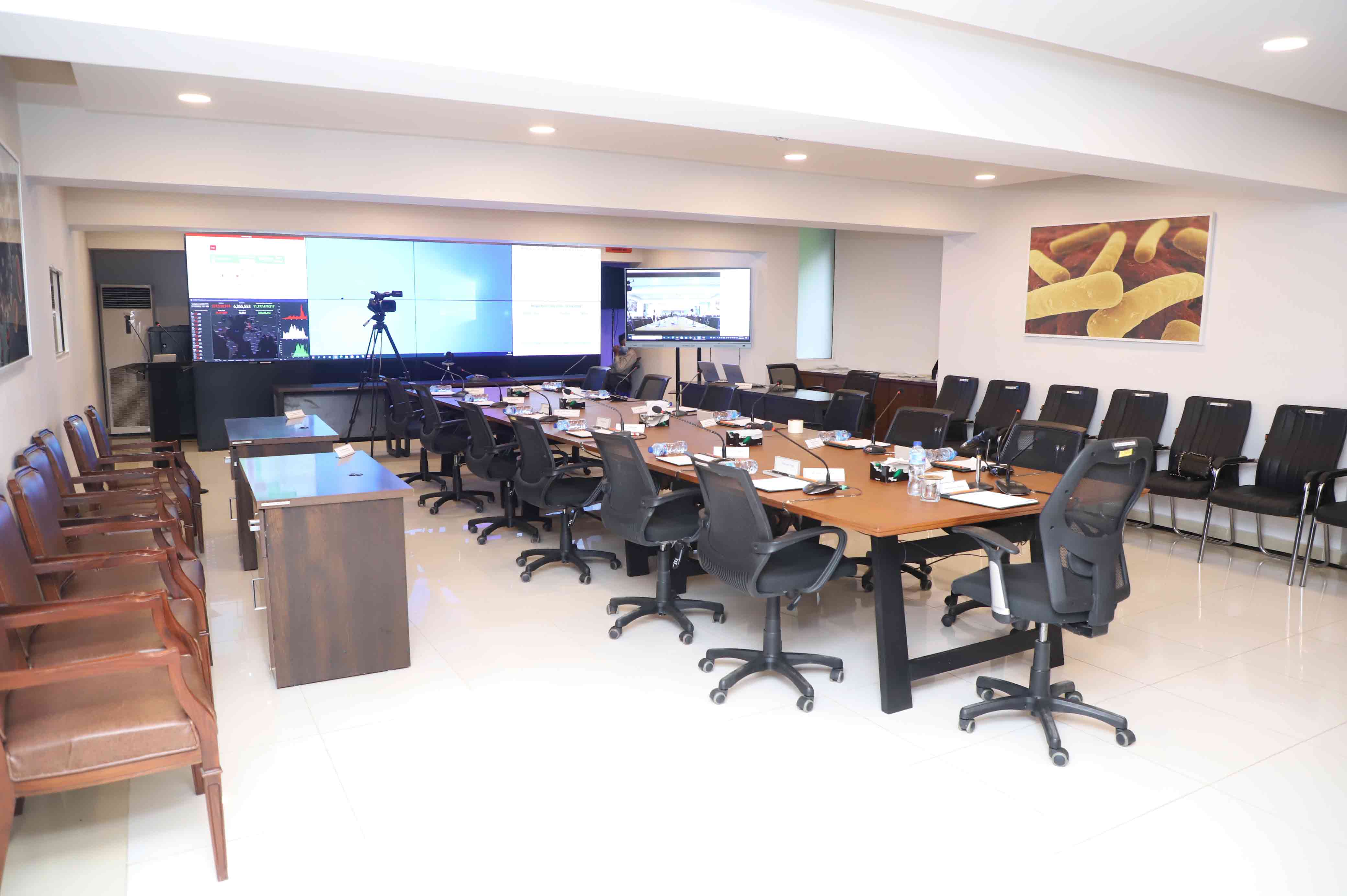

Public Health Bulletin

The Public Health Bulletin (PHB) is a communication tool which is produced by Field Epidemiology & Disease Surveillance Division (FE&DSD), National Institute of Health to disseminate authentic & timely information regarding priority diseases from provinces and regions of Pakistan. The PHB presents a snapshot of disease status at provincial and district levels to health authorities to implement appropriate public health measures. The various sources of data are IDSR reporting, evidence based surveillance and outbreak investigations. PHB also aids in building capacity of health professionals by giving them opportunity to enhance their skills by writing reports about disease alerts, outbreaks and key public health interventions.

Program

Field Epidemiology & Laboratory Training Program

FELTP at Glance

The Field Epidemiology & Laboratory Training Program (FELTP) is the joint initiative of the NIH, MoNHSR&C and the Centres for Disease Control and Prevention (CDC) USA, aimed at strengthening the national capacity in disease surveillance and outbreak response. The Objective of FELTP is to strengthen the IHR core capacity of workforce for real time surveillance.

FELTP frontline course was launched in 2016. It is a short training course of 3 months duration. The training is designed for public health workers from all levels which are actively involved in surveillance work. Two frontline training courses have been completed while one is in process.


11 Cohorts (214 Field Epidemiologists):

  • 180 graduates from the two year training program (10 cohorts).
  • 33 fellows currently enrolled in three cohorts (11th Cohort).
  • Over 1500+ government officials trained through short courses.

National Stop Transmission of Polio (NSTOP)

2011: 16 FELTP trainees were deployed to 16 high-risk districts for polio as N-STOP officers in a new program designed by FELTP with partner’s collaborations

2018: 68 NSTOP officers (deployed in high-risk districts/areas and EOCs/ ERU), NSTOP remains one of the only government-owned program within the Global Polio Eradication Initiative


Sentinel Surveillance for Viral Hepatitis (A, B, C, D, E)

In response to the request of Prime Minister’s Hepatitis Control Program, FELTP established 5 sentinel surveillance sites-one in each province and one in Islamabad to identify risk factors for all types of viral hepatitis with a laboratory component. Monthly reports are being shared regularly with all hepatitis control programs in Pakistan.


Program Dates

  1. 2007­: Pakistan FELTP launched first training
  2. 2009: Acute Viral Hepatitis surveillance
  3. 2011: NSTOP
  4. 2013: Veterinarian joined 2 years FELTP program
  5. 2014: Pakistan Army doctors joined 2 years FELTP program
  6. 2016: Frontline

Institutionalizing FELTP

  1. Director of FELTP: Executive Director of Pak NIH
  2. Division of Field Epidemiology and Surveillance (DFES) Pak NIH
  3. Provincial Disease Surveillance and Outbreak Response units (PDSRU)
  4. A federal unit at NIH

IHR 2005 Compliance

Under the leadership of Ministry of Health, FELTP facilitated in drafting legislation for disease reporting which also fulfilled requirements for IHR 2005 compliance. A legislative document was approved with provincial feedback by MOH.

One Health

To strengthen zoonotic disease surveillance system and enhance collaboration with human and animal health sector a cooperative agreement was done with the National Agriculture Research Center (NARC). Ten veterinarians are currently enrolled in the FELTP.

Transparency

Right of Access to Information Act, 2017

In compliance with the Right of Access to Information Act, 2017, the Centers for Disease Control (CDC), NIH publishes the following statutory disclosures.

Sr. Required Disclosure Item CDC – NIH Pakistan Information
1Description of organization, functions, duties, powers and servicesProvided in the “About the Center” section above.
2Directory of officers and employeesPublished below in the CDC Staff Directory.
3Statutes, rules, regulations, notificationsN/A
4Substantive and procedural rules, manuals and policiesAs per the NIH Re-organization Act, 2021 and the rules / regulations made thereunder.
5Facts and background relating to important policies and decisionsCDC implements policies related to national disease surveillance, early warning systems, outbreak response, public health emergency preparedness, One Health coordination, priority disease monitoring, event verification and epidemiological reporting. Decisions are exercised under the NIH Re-organization Act, 2021; CDC mandates, surveillance guidelines, technical standards and emergency response frameworks are available on the NIH official website.
6Criteria and conditions for licenses, permits, grants, approvalsN/A
7Additional disclosure itemN/A
8Detailed budgetThe annual budget is maintained and disclosed by the NIH Finance Division. CDC does not maintain a separate independent budget disclosure mechanism.
9Expenditure and revenue informationFinancial expenditure, revised estimates, revenue targets and receipts are maintained by the NIH Finance section and are disclosed through the relevant channels.
10Procedure under Right of Access to Information Act, 2017Requests for information are processed under the Right of Access to Information Act, 2017 through the designated CDC focal person (details below).
11Audit reportsAudit reports relevant to CDC are uploaded after approval and release by the competent authority through the NIH Finance Section.
12Inquiry and investigation reportsAdministrative inquiry reports finalized and approved for disclosure are uploaded where applicable.
13Performance reports and finalized reportsCDC regularly publishes finalized reports on the NIH website, including the Weekly Public Health Bulletin (PHB), Seasonal Awareness & Alert Letter (SAAL), surveillance summaries, guidelines and health advisory letters.
14Finalized meeting minutesInternal CDC meeting minutes remain confidential and are not publicly disclosed. Approved minutes of the National Command and Operation Centre (NCOC) meetings may be uploaded separately where authorized.

RTI Focal Person

Ms. Nazia Hassan Khan, Health Education Officer (HEO)
Phone: 0333-3248833  |  Email: naziakhakwaani@gmail.com

Directory

CDC Staff Directory

Sr. Name Designation BPS Contact No.
1Dr. Mumtaz Ali KhanChief19051-9255566, 051-9255575 (fax)
2Mr. Muazam Abbas RanjhaPrincipal Scientific Officer19051-9255815
3Dr. Nighat AkbarSenior Scientific Officer18051-9255237
4Dr. Shafiq ur RehmanSenior Scientific Officer18051-9255237
5Ms. Nazia Hassan KhanHealth Education Officer17051-9255237
6Dr. Muhammad MudassarScientific Officer17051-9255237
7Dr. Nosheen AwanScientific Officer17051-9255237
8Mr. Majid Ali TahirHealth Education Officer17051-9255237
9Ms. Sana HabibStatistical Officer17051-9255814
10Dr. Wajiha WaqarScientific Officer17051-9255814
11Dr. M. Hamza IkramScientific Officer17051-9255237
12Dr. Maryam TanveerScientific Officer17051-9255237
13Mr. Ahmed AliStatistical Assistant15051-9255237
14Ms. Rukhsana SarwarStatistical Assistant15051-9255237
15Mr. Israr KhanStenotypist14051-9255566
16Mr. Hamza NazirStore Keeper14051-9255566
17Mr. M. Rashid MehmoodUDC13051-9255566
18Mr. M. HamzaLDC11051-9255566

Note: Salary, benefits and privileges are as per the applicable Basic Pay Scales (BPS).